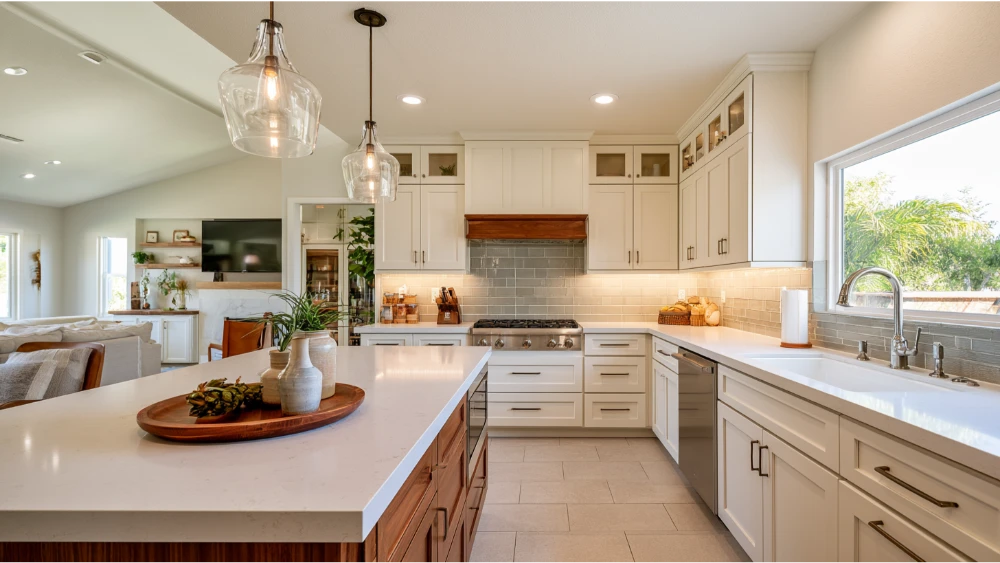
Key Takeaway
Deciding whether to reface, repaint, or replace your kitchen cabinets comes down to the condition of the cabinet boxes, not just how they look. Repaint when the boxes and doors are sound but the finish feels dated. Reface when boxes are solid but you want a new door style. Replace when boxes are damaged, mold is present, or the layout no longer works for how you cook.
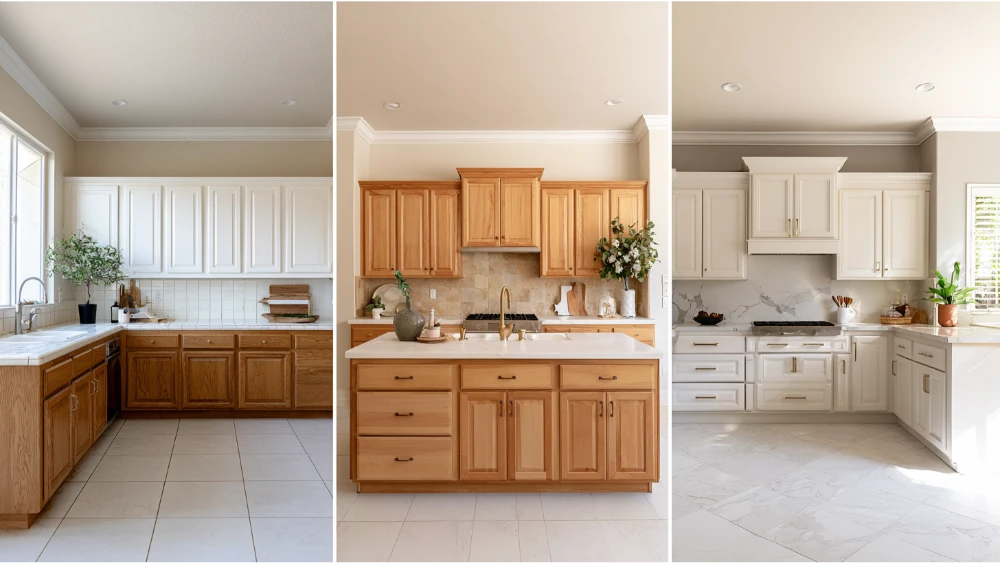
Here’s the short answer. Repaint your cabinets if the layout, boxes, doors, and drawer fronts are in good shape but the color or finish feels dated. Reface them if the cabinet boxes are solid but you want a new door style or a different look on the visible surfaces. Replace them if the boxes are damaged, the layout doesn’t work, or you want a new kitchen that functions better from the inside out. Painting kitchen cabinets is the surface update. Refacing swaps the cabinet doors and drawer fronts while keeping the existing cabinets in place. Cabinet replacement rebuilds everything, including the potential to change your kitchen layout. Which one fits depends on the condition of your cabinets, not just how they look.
Reface, Repaint, or Replace: The Quick Cost Comparison
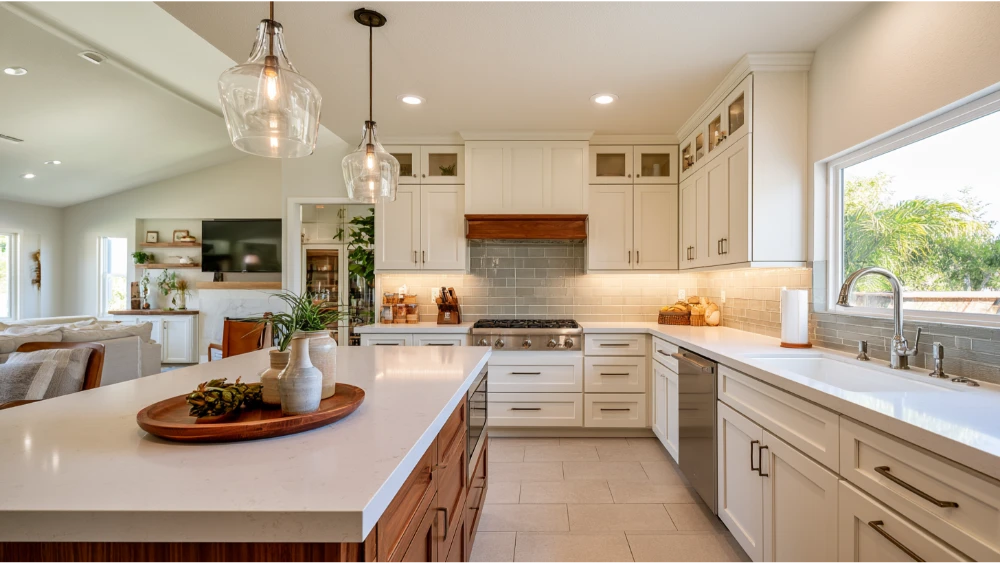
Before you decide, it helps to see the three paths side by side. Each one changes something different and disrupts your kitchen to a different degree.
| Option | What Changes | What Stays | Disruption | Longevity |
|---|---|---|---|---|
| Repaint | Color and finish | Cabinet boxes, doors, drawer fronts, layout | Lowest | Shorter finish life |
| Reface | Cabinet doors, drawer fronts, visible faces, hardware | Cabinet boxes, layout | Moderate | 15 to 20 years |
| Replace | Boxes, drawers, doors, storage, layout | Nothing, unless you choose to | Highest | Longest |
On a cost comparison, think of it in relative terms. Repainting is the least involved and the most cost effective solution when the structure is sound. Kitchen cabinet refacing is the middle path, more than paint but less than a full replacement. Complete cabinet replacement is the most comprehensive because it rebuilds structure and layout. One more distinction worth knowing: cabinet refinishing is not the same as cabinet painting. Refinishing strips and restains wood so the grain shows, while a painted finish covers the surface with an opaque cabinet color.
Start With the Cabinet Boxes, Not the Finish
Most homeowners decide by looking at color and door style first. We’d flip that. The existing cabinet boxes are the foundation, and if they’ve failed, paint and refacing are off the table. Before you commit to anything, inspect the bones.
- Sink-base swelling or soft spots from years of moisture
- Soft, crumbling MDF or particleboard
- Loose frames or joints that flex when you push
- Shelves that sag under normal weight
- Drawer glides that stick, drop, or won’t close square
- Hinge screws that have torn out of the wood
- Face frames separating from the box
- Musty odor, visible mold, or a history of water damage
- Uneven or poorly aligned installation
The rule is simple. If the boxes are square, dry, structurally sound, and solidly mounted, you have options. If they’re damaged or failing, the honest recommendation is kitchen cabinet replacement, no matter how nice the doors look.
When to Repaint: A New Coat for Existing Cabinets
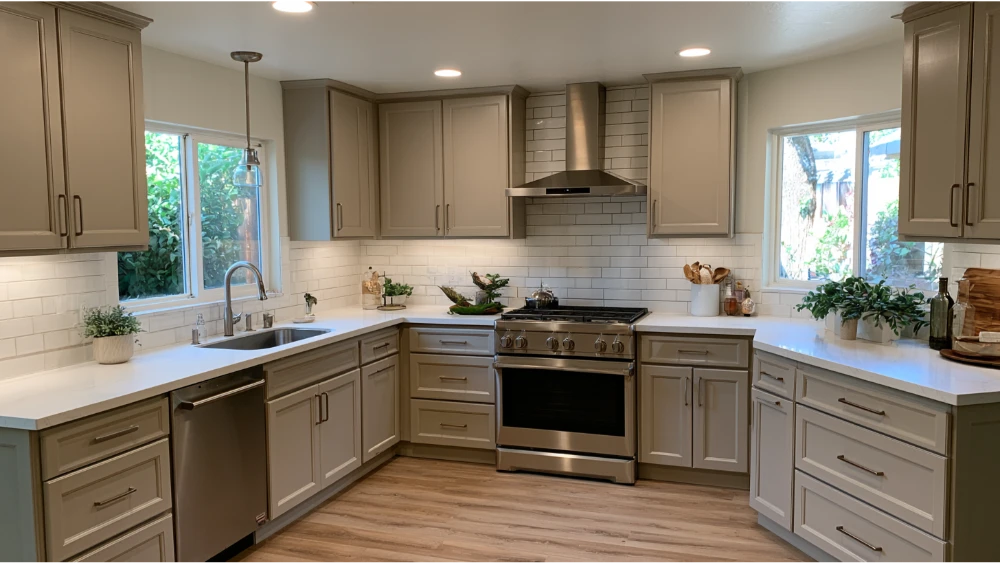
Painting kitchen cabinets makes sense when the boxes and cabinet doors are sound, the layout works, and you mainly want a color or finish change. It’s the most cost effective way to refresh a kitchen when the only real problem is a dated look or a style that feels tired. A new coat over solid doors and drawer fronts that you’re happy to keep can read like a small kitchen makeover. Poor candidates are cabinets that are peeling, swollen, delaminating, or sitting in constant moisture around sinks and dishwashers.
Prep is where painted cabinets succeed or fail. Surfaces need cleaning, then sanding or deglossing, then a primer that helps paint bond. Skip that and the finish chips within months, leading to frequent touch ups. Cure time also matters. According to Benjamin Moore, cabinet paint can be dry to the touch in 2 to 4 hours, but painted cabinets shouldn’t be used for at least 2 to 3 days, and the surface should be fully cured before cleaning. That’s product-specific guidance, not a universal promise.
If your home was built before 1978, take lead seriously. The EPA’s Renovation, Repair and Painting Rule requires paid firms disturbing old painted surfaces to be certified and follow lead-safe practices. Keep the space ventilated too, since paints and coatings release VOCs during application.
When Cabinet Refacing Is the Right Choice
Cabinet refacing is the smart middle path when the boxes are solid but the visible style is stuck in another decade. You keep the existing cabinet boxes and change everything you see: new cabinet doors, new drawer fronts, new veneer or laminate over the existing cabinet framework and exposed sides, and usually new hardware. The result reads like a brand new kitchen without tearing out the structure.
Be clear on the limits. Refacing changes appearance, not function. It won’t fix a cramped layout, add interior storage, or rescue weak boxes and failing joints. If the frames flex or the drawer boxes are worn out, refacing is putting new doors on a tired frame. When the existing cabinet boxes are solid, refacing delivers a fresh look while keeping materials out of the waste stream. The EPA estimated the United States generated 600 million tons of construction and demolition debris in 2018, so keeping sound cabinets in place is a reasonable choice when they still have life left.
When New Cabinets and a Full Remodel Make Sense
Full replacement is the only path that changes how the kitchen works, not just how it looks. New cabinet boxes, new drawers, new doors, and the freedom to rework storage, appliance placement, and workflow. It’s the right call when you’re fighting the kitchen every day.
Clear signs point here: warped or failing cabinet boxes, mold, water damage, drawers that never sit right, or poor original construction. Layout is the other big driver. NKBA planning guidelines recommend work aisles of at least 42 inches for one cook and 48 inches for multiple cooks, walkways of at least 36 inches, and a continuous prep area at least 36 inches wide by 24 inches deep next to the sink. They also suggest 24 inches of landing on one side of the sink and 18 on the other. If your current layout and floor plan can’t meet numbers like these, new doors won’t help. Complete cabinet replacement usually takes several weeks and often becomes part of a full kitchen remodel or kitchen renovation. That’s not an upsell. It’s the honest answer when function, not finish, is the real problem.
Cabinet Materials: Wood, MDF, Laminate, Melamine, and Thermofoil
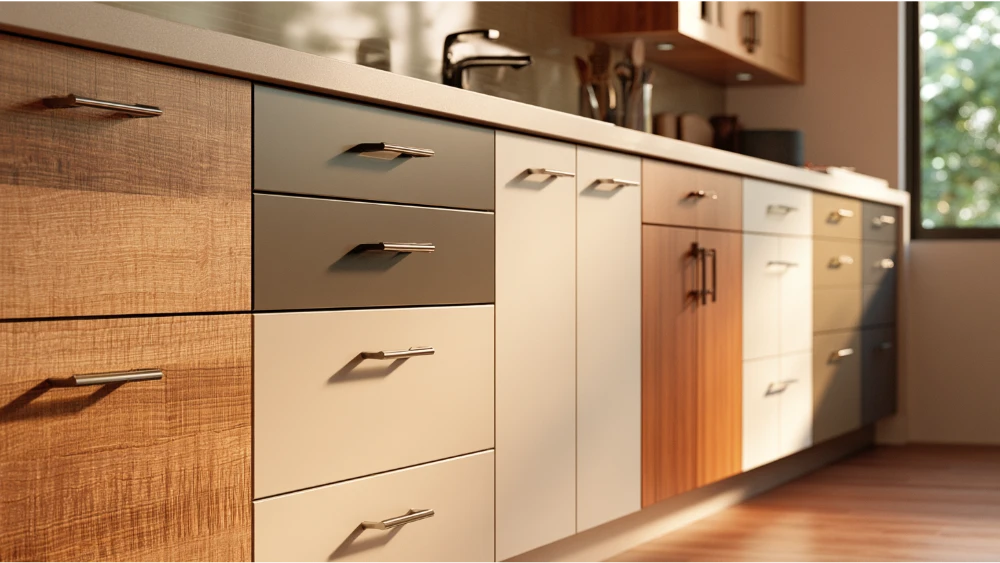
What your cabinets are made of shapes what’s possible.
- Solid wood: Can be refinished with a stain to show the grain or painted for an opaque look. The most forgiving of the materials, and it holds up well in high traffic areas.
- MDF: Takes paint well when prepped properly, but performs poorly once it swells from moisture.
- Laminate and melamine: Paintable with the right process, meaning cleaning, deglossing or sanding, and an adhesion-focused primer.
- Thermofoil and foil wrap: Once it starts peeling, painting rarely holds. Refacing or replacement is usually smarter.
If you’re bringing in new cabinets or components, look for composite wood materials that are TSCA Title VI compliant. Those federal formaldehyde standards match California’s CARB Phase II rules, which matters for indoor air in your home.
Cost Comparison, Timeline, and Long-Term Value
We won’t publish price figures, because the right cost depends on your kitchen. But the order is consistent. Painting is the fastest, least disruptive, and most cost effective option, with the shortest finish life and the least demand on your money. Refacing sits in the middle on cost, more than paint and less than replacement, and a quality reface can hold up for 15 to 20 years. A full remodel with new cabinets is the most expensive option and the biggest disruption, and it’s also the longest-lasting and most customizable. Materials and finish choices move the cost within each path, and so does whether you keep or relocate appliances. Solid boxes in good condition also lower ongoing maintenance, since you’re not chasing repairs.
| Path | Relative Cost | Timeline and Disruption | Expected Lifespan |
|---|---|---|---|
| Repaint | Lowest (most cost effective when boxes are sound) | Fastest, least disruptive | Shortest finish life |
| Reface | Middle (more than paint, less than replacement) | Moderate | 15 to 20 years |
| Replace | Largest investment | Several weeks, biggest disruption | Longest, most customizable |
We think about it this way: long-term value usually matters more than short-term savings. Spending less on paint makes financial sense when the visible parts and the boxes are sound. Spending less on a surface update over failing boxes just delays the real cost.
California and Sacramento Notes Before You Start
A few practical points for California homeowners. In pre-1978 homes, paid work that disturbs paint must follow EPA lead-safe practices. Repainting is usually cosmetic, but when cabinet replacement ties into electrical, plumbing, fixture relocation, appliance changes, or work on the walls or structure, it can trigger permit review with your local building department. On the consumer-protection side, the California Contractors State License Board requires a written contract for home improvement projects over $500, and down payments can’t exceed $1,000 or 10% of the contract price, whichever is less. Good things to know before you sign anything.
How Revana Homes Helps You Make the Right Call
Our approach starts with inspection, not a sales pitch. We evaluate the cabinet boxes, the layout, the doors, and the materials, then give you a tailored recommendation based on what your kitchen actually needs. If paint is the right answer, we’ll tell you. If the layout is the real problem, we’ll explain why. Clear communication, honest pricing, and craftsmanship carry through every project, from concept to completion. Our Kitchen Remodeling work serves Sacramento and the Greater Sacramento Area, including Folsom, Roseville, El Dorado Hills, Lincoln, Elk Grove, Rocklin, and Natomas. Ready to figure out the smart move for your kitchen? Request your free estimate or call us at (916) 205-5112. The estimate is where the collaboration begins.